Happy Happy Happy Cat
TL;DR · Origin The meme is a video of a cat bouncing up and down behind a glass door. The source is a post by the X (then Twitter) account @1Nssu on 8 November 2015, captioned in Japanese:…
Origin
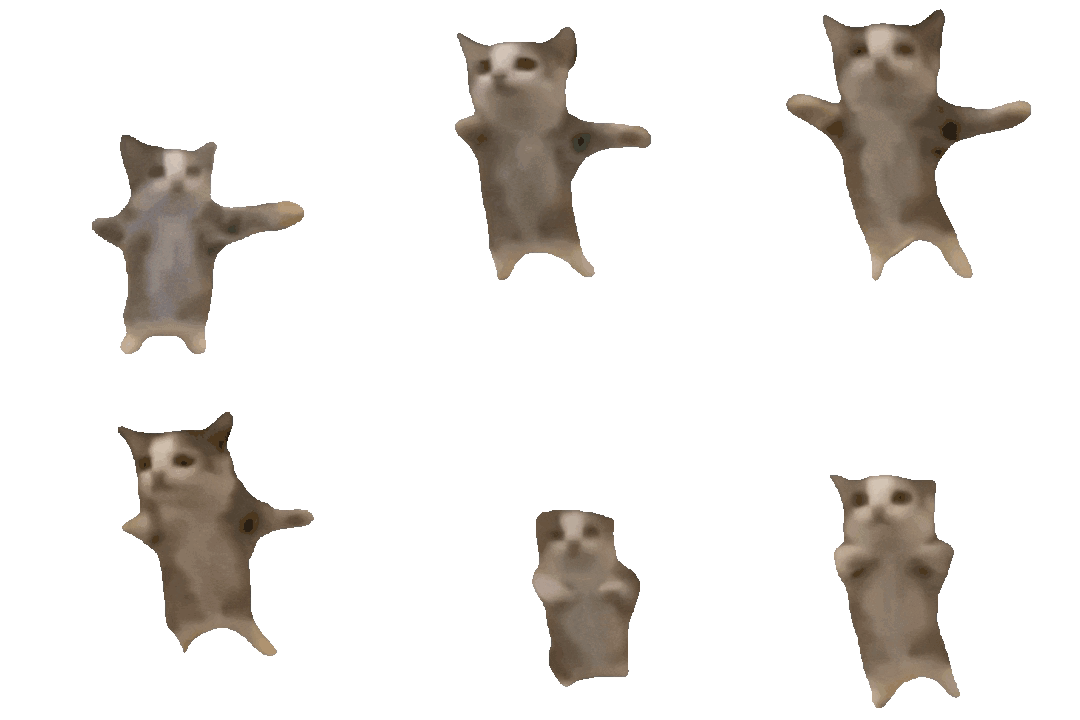
The meme is a video of a cat bouncing up and down behind a glass door. The source is a post by the X (then Twitter) account @1Nssu on 8 November 2015, captioned in Japanese: "The pet shop I always go to closes today… I want to take him home." So it is not a cat greeting its owner but footage shot at a pet shop on its closing day, with the cat reacting to a person on the other side of the glass.
Over nine years the post accumulated roughly 48,600 retweets and 100,000 likes, while a repost on Imgur drew about 5.5 million views within two days. On 13 November that year the YouTube channel The Pet Tree House reuploaded it.
Until the sound was attached
The clip became the meme we know only after audio was added. The accompanying track is "My Happy Song" by the children's music channel Super Simple Songs; the segment used comes from the 0:28 mark of the version uploaded to YouTube on 7 November 2019. The video (2015) and the sound (2019) existed separately, four years apart, and the meme came into being when editors joined them.
The crux is that the cat's bouncing happens to land on the beat. The behavior is presumably a demand to be let through the door, but with an upbeat song under it the scene reads completely differently — as dancing with joy. The meaning flips on the strength of one piece of music.
Spread
The real spread came in 2022–2023. An edit posted on 19 March 2022 drew 267,000 views, and a version posted on 5 February 2023 with the background removed — leaving only the cat — reached 2.1 million views in two months, turning it into material that could be laid over any other video. That background-removed version was the inflection point for the flood of derivatives.
It then moved to TikTok, with a multi-cat edit on 8 March 2023 and an edit of a cat eating Lao Gan Ma chili sauce on 18 March (2.5 million views in three weeks). By April it had spread across Facebook groups, including storytelling edits built around rescue and survival narratives.
Usage
- Expressing exaggerated joy — a video in place of words
- On seeing something you love — as a reaction clip
- Laid over other footage — using the background-removed version as an overlay
- In food or merchandise posts — as an editing element that signals excitement
A different meme with the same name
One caution. In the English-speaking internet, Happy Cat originally refers to an entirely different meme: a photo of a smiling cat posted to the Something Awful forums in 2003, which, once captioned "I Can Has Cheezburger?", launched the LOLcats genre and the I Can Has Cheezburger website. It is considered one of the most consequential images in internet meme history.
The bouncing cat known in Korea as "Happy Cat" is the separate Happy Happy Happy Cat. The names are close enough to confuse, so it is worth keeping the 2003 LOLcats lineage and the 2015 video lineage distinct.
Sources
- Know Your Meme, "Happy Happy Happy Cat" — the 8 November 2015 @1Nssu post and its caption, 5.5 million views on the Imgur repost, the "My Happy Song" source, per-edit spread figures for 2022–2023
- Know Your Meme, "Happy Cat" — the separate 2003 Something Awful post that began LOLcats and I Can Has Cheezburger
- PETBOOK, "How the 'Happy Cat' Meme Really Came to Be" — how the original Happy Cat meme came about
- LatestLY, "Happy Happy Happy Cat Meme Song" — summary of the song used and the viral path