Hallel-yaru (Korean Hallelujah Flip Meme)
TL;DR · 'Hallel-yaru' (할렐야루) is a Korean internet coinage built by swapping the order of the last two syllables of the Christian praise expression 'Hallelujah' (할렐루야) — 'ru' and 'ya' — to …
'Hallel-yaru' (할렐야루) is a Korean internet coinage built by swapping the order of the last two syllables of the Christian praise expression 'Hallelujah' (할렐루야) — 'ru' and 'ya' — to produce a slightly off-kilter variant. The shift began as simple phonetic play, but the word quickly settled into a one-shot reaction expression carrying the same charge as 'amazing,' 'awesome,' or 'this is great.' Because the religious original retains strong overtones of joy and blessing, internet users have folded those overtones into everyday casual contexts, writing lines like 'My mood today is hallel-yaru' or 'This song is straight-up hallel-yaru' as a universal positive exclamation.
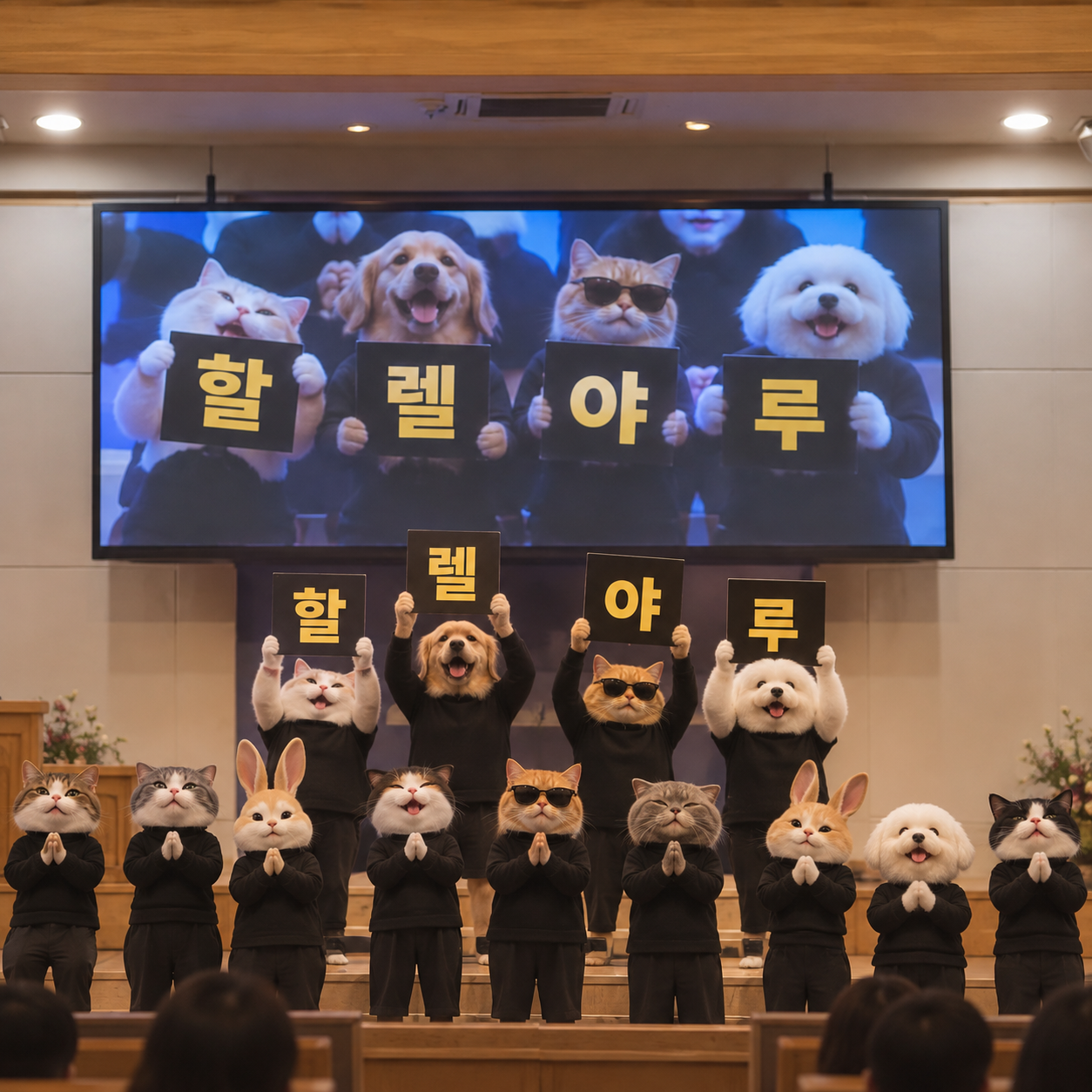
The direct trigger of the meme is reported to be a small accident at the youth group of a Korean church. During an event, the placards spelling out 'Hallelujah' were lifted with the 'ru' and 'ya' panels reversed, producing 'Hallel-yaru,' and a photo or video of the moment was shared on social media. Osan Baptist Church is widely cited as the location of origin. As the short clip and photo spread through Instagram and X, the word evolved into a fully-formed meme from late 2025 onward, and by early 2026 it had become a standard entry in 'newest slang' card-news roundups and trend-curation newsletters in Korea.
'Hallel-yaru' is most often deployed as a standalone exclamation, but it also lives at the end of sentences as a one-word summary for any positive moment, anchoring captions and on-screen text. Lines like 'Today's trends are total hallel-yaru,' 'Weekend starts: hallel-yaru,' and 'Payday: hallel-yaru' all use the word to mark that something good has just happened, and it slots seamlessly into the same role as existing Korean positive exclamations such as 'daebak,' 'michyeotda,' and 'ojyeotda.' Trend-curation publications have used header lines like 'Today's trends are total hallel-yaru!,' deliberately repeating the word for catchphrase value.
'Hallel-yaru' belongs to a wider Korean internet tradition of syllable-flip and pronunciation-twist coinages — turning 'ah jinjja' into 'jinjja-ah,' 'good morning' into 'gomtaeng-i,' 'hashillae?' into 'hashillaeng,' and so on — in which Korean speakers create freshness by reordering or softening sounds. It also shares phonetic-play DNA with peer 2026 exclamations such as 'Nanrijabeseu,' 'Ajaseu,' and 'Yareu.' What sets 'Hallel-yaru' apart is that it carries the warmth and familiarity of a religious word, allowing even non-religious users to adopt it easily; cultural commentators have framed it as a case of religious vocabulary functioning as cultural vocabulary in a casual, secular register.
Through 2026 'Hallel-yaru' has become a regular fixture in Korean slang explainers, sitting alongside contemporaneous coinages such as 'Nanrijabeseu,' 'Dujon-keu,' and 'Jumeokjaro,' and appearing in marketing copy, event slogans, and entertainment show captions in the slot traditionally reserved for positive exclamations. A small minority of users have raised concerns about treating a religious word casually, but reports note that the church identified as the originating site appears to have embraced the slip as a piece of self-parody, and internal religious-community resistance has stayed limited. The fact that a single accidental moment at a youth-group event crossed into the national slang index within roughly six months is being recorded as a vivid example of the speed at which Korean SNS culture converts everyday mishaps into durable internet memes.