Monkey Puppet
TL;DR · OriginThe monkey puppet is Kento, a character from the Japanese children's television program "Ōkiku Naru Ko" (Growing Children). The show premiered on April 7, 1959 and ran until …
Origin
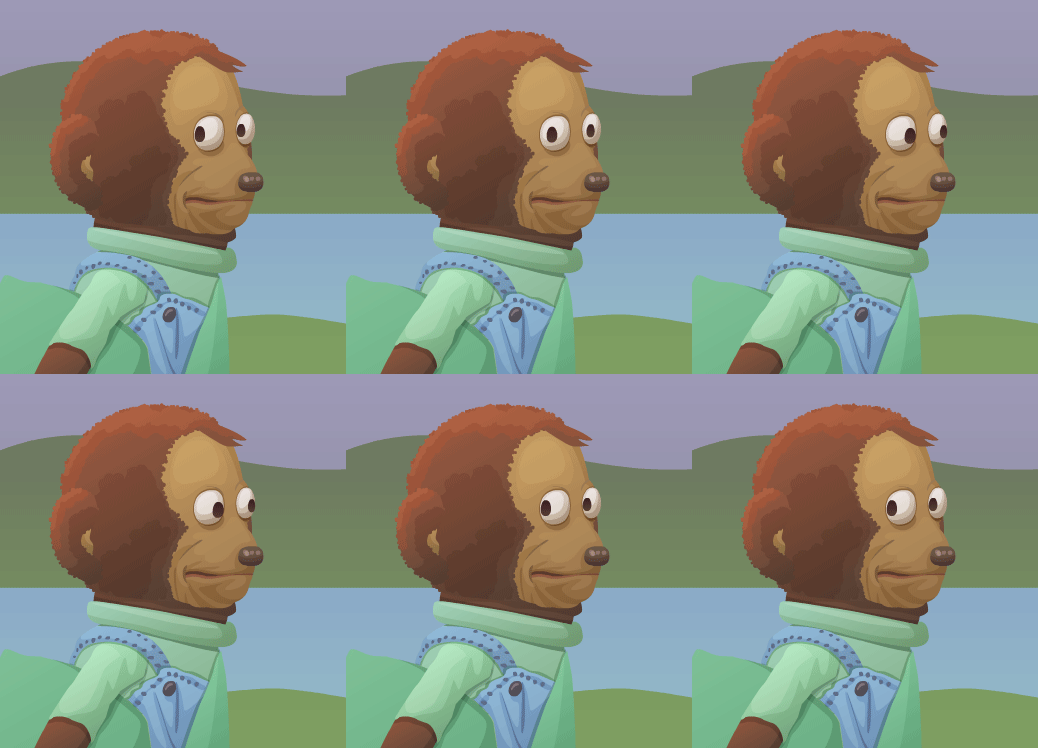
The monkey puppet is Kento, a character from the Japanese children's television program "Ōkiku Naru Ko" (Growing Children). The show premiered on April 7, 1959 and ran until March 18, 1988, and it also aired in Latin America in Spanish dub, where the puppet was known as "Pedro" (Know Your Meme entry).
The moment used as a meme is the brief instant when the puppet looks toward the camera and then slides its eyes away. Because the puppet's face cannot change and only the eyes move, the awkwardness of saying nothing and simply avoiding a gaze reads unusually clearly. In the original it was an unremarkable shot from a program that ran nearly thirty years, but cut out of context it lost all specificity and became a reaction image that fits anywhere.
Spread
The meme took off in Spanish-speaking communities first. On March 31, 2016, YouTube user TobiSilvero uploaded the clip (since deleted), and on April 8, 2016, the Chilean outlet t13 covered the emerging trend under the name "No ahora por favor" ("not now, please"). That phrase became the standard early Spanish-language caption.
It crossed into English-speaking platforms that summer. A GIF was posted to Giphy on June 23, 2016, and on July 1, Twitter user @ultkjongin used the image as a reaction to an entertainment news story, drawing press coverage that accelerated the spread. It reached Reddit's r/MemeEconomy on November 2. By the end of summer 2016 it had settled in as one of the standard English-language reaction images.
Usage
- When a conversation gets uncomfortable and you look away without speaking
- As a reaction to being caught doing something
- Watching someone else's argument from the side and averting your eyes
- As a two-panel before/after using the forward look and the sideways look