Gekioko Poonpoonmaru
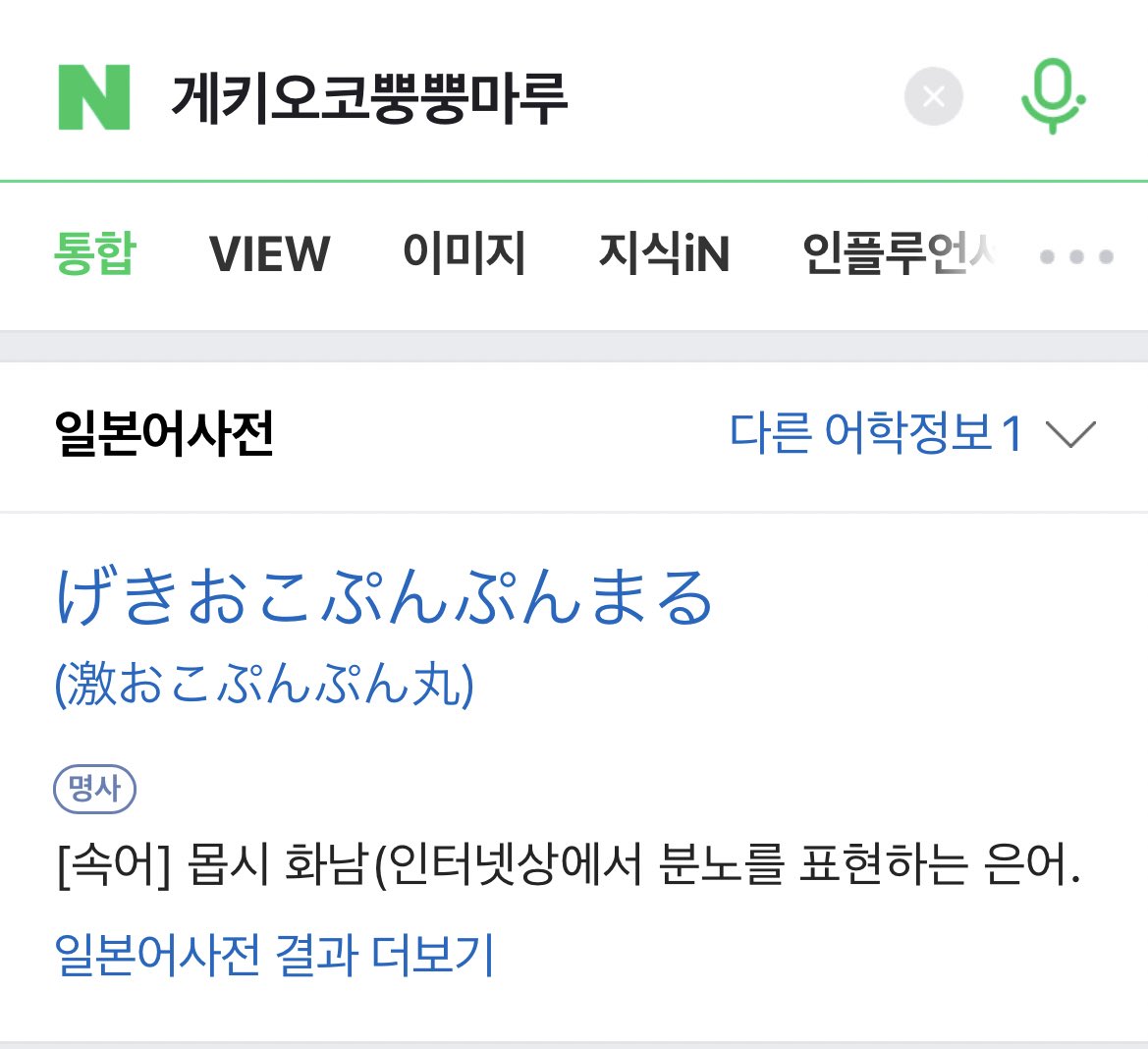
TL;DR · Origin "Gekioko punpunmaru" is a Korean transliteration of the Japanese 激おこぷんぷん丸. Its root is oko, gyaru slang in use around 2011, clipped from okoru ("to get angry") down to two s…
Origin
"Gekioko punpunmaru" is a Korean transliteration of the Japanese 激おこぷんぷん丸. Its root is oko, gyaru slang in use around 2011, clipped from okoru ("to get angry") down to two syllables. Compressing anger into something short and cute was characteristic of gyaru speech.
The tiers came in 2013. The family of expressions started appearing frequently on Twitter around February, and a tweet posted on 2 March laid out "words girls use when they're angry" as six levels of escalating rage, at which point the trend exploded. 激おこぷんぷん丸 occupied the third slot on that chart — "strongly angry."
The anger scale
What spread was not a single word but a ranked list. The further down you go, the longer and sillier the phrase gets, and that paradox — the angrier you are, the more childish you sound — is the joke.
- oko — the mild tier; merely sulking
- maji oko — normal; "seriously angry"
- gekioko punpunmaru — the strong tier. "Punpun" is onomatopoeia for huffing breath, and "-maru" is the suffix once attached to old Japanese given names and ship names, so tacking it on instantly makes the phrase sound like a joke
- muka chakka fire — the top tier; roughly "irritation, ignition, fire," at which point the language has fallen apart entirely
Still more exaggerated tiers followed below these. Because the format was a chart, anyone could append their own entry, so derivative levels kept multiplying.
Spread
By April 2013 Japanese media were covering it, and it gained enough recognition to be nominated for that year's New Words and Buzzwords Award — a case of internet slang climbing all the way to offline press and year-end roundups.
In Korea the sound arrived before the meaning. Reactions on X and community boards focused on how comical and cute the syllables themselves are, and it was taken up even by people who know no Japanese. As a result Korean usage leans less toward expressing actual anger and more toward performing anger to emphasize cuteness.
Usage
- When mildly sulking — signaling that this is not real anger
- Venting while keeping the mood light — the phrase is too long and cute to carry an edge
- Exaggerating degrees of anger — invoking the chart to assign a tier
- In Japanese subculture contexts — where the gyaru register is the point
Sources
- Japanese Wikipedia, "激おこぷんぷん丸" — "oko" appearing around 2011, the six-tier tweet of 2 March 2013, April press coverage, buzzword award nomination
- Nico Nico Pedia, "激おこぷんぷん丸" — the list of tiers and derivatives
- Pixiv Encyclopedia, "激おこぷんぷん丸" — subculture usage
- Weblio dictionary, "激おこぷんぷん丸" — definition and usage
- Tanetan (site explaining origins of Japanese slang), "激おこぷんぷん丸とは" — origin summary
- Theqoo, "Gekioko punpunmaru is so cute, does anyone know where it comes from?" — an example of Korean consumption driven by the sound