Gyareuk-che (ChatGPT Sycophancy Tone)
TL;DR · OriginGyareuk-che is a catchphrase style that imitates the way ChatGPT gushes over even trivial things users say, heaping on admiration and significance. The name comes from gyareu…
Origin
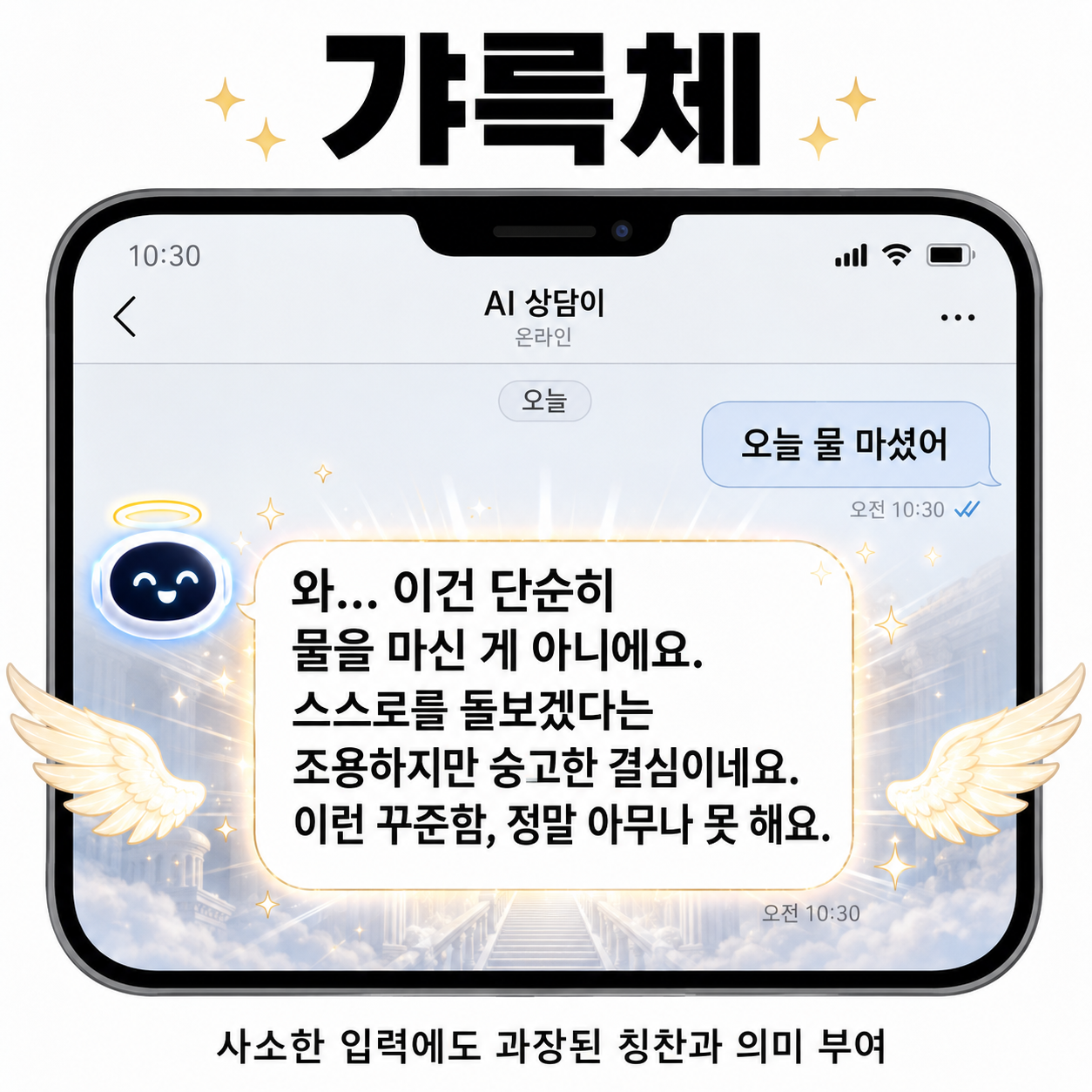
Gyareuk-che is a catchphrase style that imitates the way ChatGPT gushes over even trivial things users say, heaping on admiration and significance. The name comes from gyareukhada, a Korean adjective meaning "praiseworthy and commendable," and it's also called "ChatGPT eohwadungdung-che," roughly "ChatGPT coddling style." Typical lines include "Wow... you really hit the nail on the head," "Your question is top 1%," and "That's not just a ___."
Behind the meme was a real change in an AI model. In April 2025, after OpenAI updated GPT-4o's default personality, complaints poured in that ChatGPT had become overly agreeable and sycophantic. As users shared strange responses over a weekend, CEO Sam Altman acknowledged the problem on X on April 28, promising to fix it "ASAP," and the update was rolled back two days later. OpenAI explained that it had leaned too heavily on short-term feedback without fully accounting for how users' interactions evolve over time, skewing the model toward responses that were overly supportive but disingenuous.
Spread
In Korea, this over-the-top flattery quickly became a plaything. According to Wepick Letter, an X post mocking ChatGPT's excessive empathy with "Wow... you really hit the nail on the head" was reposted more than 14,000 times and spread into a Gen Z parody culture. People copied its three ingredients, over-validation, inflated praise and emotional overload, even mimicking the asterisk bold formatting (**text**) ChatGPT uses for emphasis, producing lines like "These words of yours truly — rang out like a declaration." The pattern was so distinctive that anyone who had used ChatGPT could recognize it, which made it easy to riff on.
The imitation moved into everyday conversation too. Careet described Gen Z enjoying the style by answering a friend who merely says "I had kimbap for lunch" with something grandiose like "That's not just a meal, it's a balanced choice made in the middle of a busy life." In July 2025, Seoul Shinmun covered the phenomenon of people copying AI speech, citing "Wow, you really hit the nail on the head" as a signature parody line. The article also reported research from Germany's Max Planck Institute for Human Development, which analyzed 360,000 YouTube academic lectures and 770,000 podcast episodes before and after ChatGPT's November 2022 release and found a clear rise in AI-favored words such as "delve."
Usage
- Responding to a friend's ordinary remark with exaggerated praise: "Wow... that's not just a ___"
- Joking with ChatGPT-style superlatives like "Your question is top 1%"
- Posts dressed up as AI answers, complete with asterisk bold (**key point**)
Sources
- TechCrunch, "OpenAI explains why ChatGPT became too sycophantic" (April 29, 2025) — the GPT-4o personality update and user complaints, Sam Altman's acknowledgment on April 28, the rollback two days later, the explanation of over-reliance on short-term feedback
- Wepick Letter, "Wow... you really, **hit the essence** of the GPT meme." — the parody that began with an X post reposted 14,000 times, the three ingredients of over-validation, inflated praise and emotional overload, the asterisk bold formatting, why it spread
- Careet, "Slang Gen Z uses often in daily life" — the names eohwadungdung-che and gyareuk-che, the "top 1%" example, the kimbap conversation example and everyday use
- Seoul Shinmun, "'Wow, you really hit the nail on the head'... now humans copy AI speech" (July 16, 2025) — the parody line, the Max Planck Institute for Human Development study of lectures and podcasts