Ka~pibara
TL;DR · OriginThe "Ka~pybara" meme comes from 〈Капибара〉, a track by the Russian musician Alexey Pluzhnikov, released under the name СтоЛичный Она-Нас. The lyrics are essentially the word …
Origin
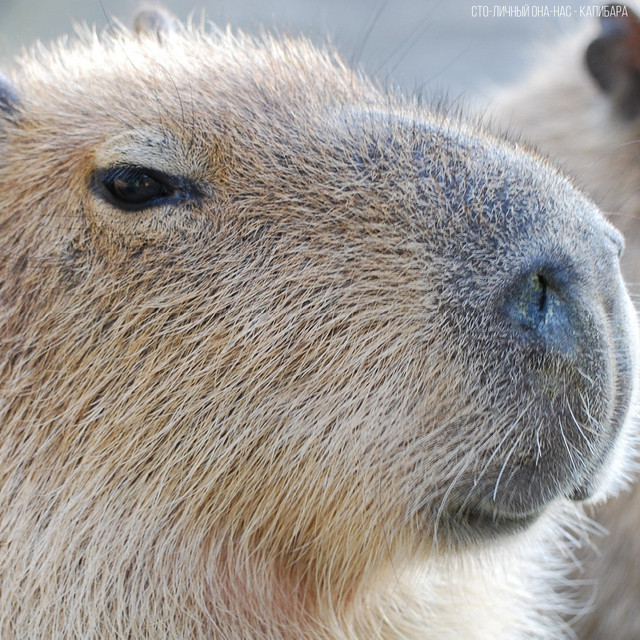
The "Ka~pybara" meme comes from 〈Капибара〉, a track by the Russian musician Alexey Pluzhnikov, released under the name СтоЛичный Она-Нас. The lyrics are essentially the word "capybara" repeated, and the drawn-out rolled Russian pronunciation is what Korean speakers transcribed as 카~피바라.
The way it was made is as offhand as the song sounds. According to the artist's own account, reported by Lenta.ru on March 6, 2023, Pluzhnikov wrote it at six in the morning when he could not sleep. He took the idea from a capybara character in a game project he was working on at the time, improvised the lyrics, and bought the melody from a beatmaker. The whole thing took roughly half an hour. The track went up on Spotify on July 16, 2022.
Spread
Nothing happened at release; it caught fire three months later. On October 19, 2022 the YouTube channel ZAKA BUMKA posted a video using the song, and a TikTok by @bebra_6361 appeared the same day, putting the sound into circulation. On November 8 a video by @justcapybaraboy pulled in millions of likes and locked in the pairing of capybara footage with this track. The official audio went up through a YouTube Topic channel on January 25, 2023 and passed 2.4 million views in two months.
The peak came in early 2023. A TikTok by @nostressjustmelon on February 20 hit 27 million plays and 4.1 million likes in three weeks, and by March 13 roughly 473,600 TikTok videos were using the sound. At the time of the Lenta report the related hashtags had accumulated 5.5 billion views and the song had entered the top 20 most-streamed tracks on UK TikTok. It reached Korea in this same window via TikTok and YouTube Shorts.
Variants and offshoots
By March 2023 the meme had triggered a generational argument of its own, with millennials and Gen Z sniping over whether it was still funny — "capybaras were funny six or eight months ago" was the tone. That is the standard late phase of a meme that spread far enough for enjoying it to read as unfashionable. Separately from the song, the capybara itself has settled in as a symbol of total unbotheredness, soaking in hot springs or letting other animals sit on its back without changing expression, so the image meme outlived the track's moment.
How it is used
- As background audio on any clip featuring a capybara — hot spring and citron bath footage most of all.
- To describe a person or animal that stays completely blank-faced no matter what chaos is going on around them.
- Simply humming the hook for no reason. The lyric is effectively one word, so singing along needs no Russian.
Sources
- Know Your Meme, "Capybara Song / Капибара" — Spotify release date (July 16, 2022) and the dated spread through ZAKA BUMKA, @bebra_6361, @justcapybaraboy and @nostressjustmelon
- Lenta.ru, "A Russian's capybara song became a global meme" (March 6, 2023) — the composer's real name, the half-hour 6 a.m. writing session, and figures on TikTok videos and hashtag views
- Ruwiki, "Капибара (песня)" — song overview and artist credit