Importance of Spacing
TL;DR · Origin"The importance of spacing" is not a meme traceable to any one person's remark — the short-form format itself became the meme. The entire form is a brief video that puts on s…
Origin
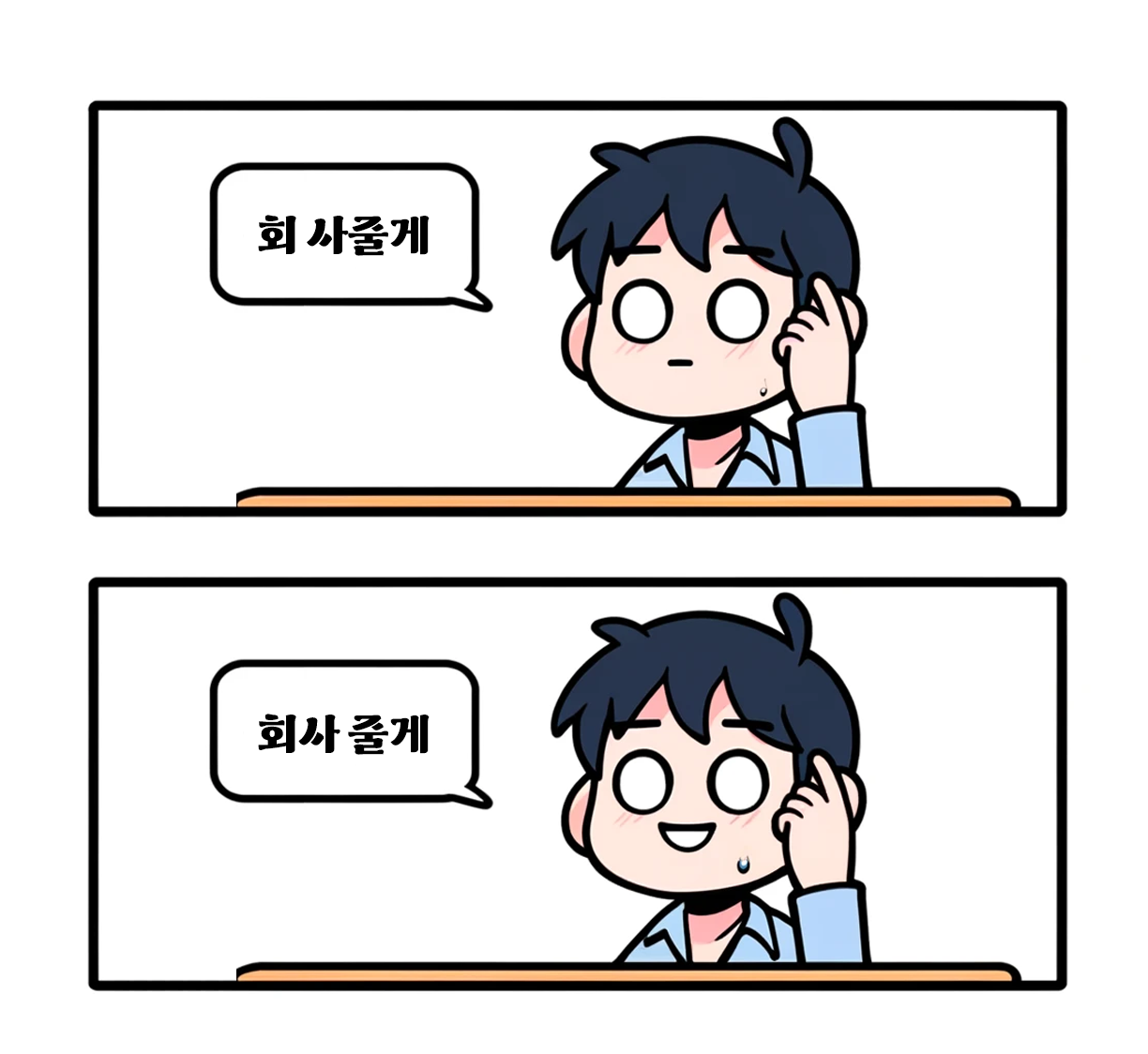
"The importance of spacing" is not a meme traceable to any one person's remark — the short-form format itself became the meme. The entire form is a brief video that puts on screen a pair of sentences made of the same characters, whose meaning flips completely depending on where you break them, and reads both aloud with a straight face.
The best-known examples:
- "Hoe sajulge" ("I'll buy you sashimi") → "Hoesa julge" ("I'll give you the company")
- "Baraeda julge" ("I'll walk you home") → "Barae? Da julge" ("You want it? Take everything")
- "Eonjena saranghae" ("I'll always love you") → "Eonje. Na saranghae?" ("When. Do you love me?") — an eternal vow becomes an anxious interrogation
The joke only works in Korean. Korean spacing is an orthographic convention that barely surfaces in speech, so the same sound can legitimately be parsed two ways. That the distinction exists only on the page, never in the ear, is the raw material of the format.
Spread
The trend started on TikTok and Instagram in the second half of 2023. The backing track is effectively fixed: "If This Song Plays at the Club," the solo debut single by the singer Woody. Switching sentences on a specific beat of that song hardened into a rule, and the music alone came to signal what kind of video you were watching.
As of January 2024 the most-viewed entries were from the TikTok accounts Eunjaekong (@eunjaewrld) at 1.9 million views, Damdamidam at 1.7 million, Eotbakjiyeon (@off__beat) at 1.5 million, Haebin-indeyo (@hvevin__) at 1.4 million, Bokdungi (@bok._.dung) at 1.4 million, and Tenegg (@teneggggg) at 990,000. No single originator owned it; many accounts each varied the same format, which is why it lasted.
The material expanded quickly, with versions built on the historical dramas airing at the time — splitting lines about the Balhae kingdom, or period-drama dialogue like "I am Taejo Wang Geon."
Usage
- Prank messages to partners and friends, purely to see how they parse it
- A counterattack when someone corrects your spelling
- Quoting genuinely ambiguous lines from workplace or school notices
- Brand social accounts building versions around their own product names
In text, the convention is to place both readings side by side; one alone is not a joke. Riding alongside the Korean idiom that a single space can decide life or death, the example sentences once used to teach orthography were absorbed wholesale into the format.