Oh, rather good
TL;DR · Origin“오히려 좋아” — “this is actually better” — is what you say when things have gone wrong and you insist on reading the loss as a gain. It is widely believed to be a coinage of the …
Origin
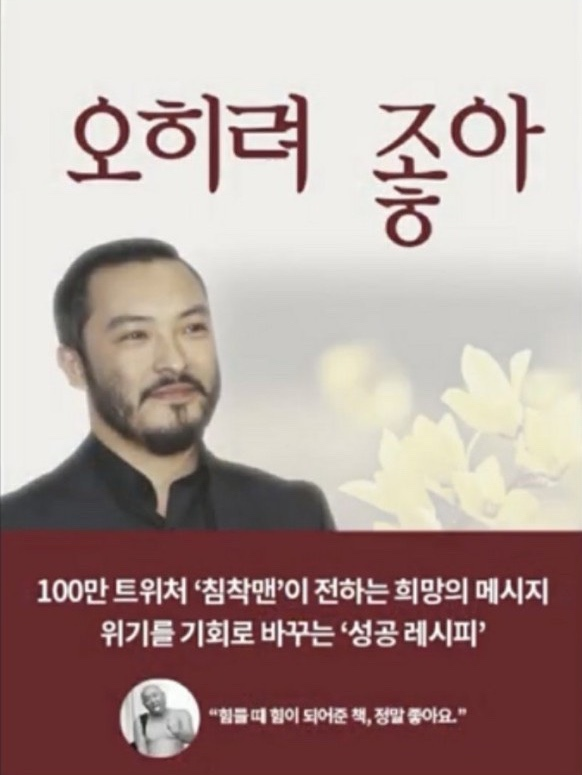
“오히려 좋아” — “this is actually better” — is what you say when things have gone wrong and you insist on reading the loss as a gain. It is widely believed to be a coinage of the streamer Chimchakman, but that is not the case. Documented uses predate his popularisation of the phrase, and two accounts of its origin still circulate side by side. No single original clip has been established.
The first account traces it to StarCraft streaming on AfreecaTV. From the mid-2010s, team-based pro leagues on the platform grew, and it became customary for streamers to watch and commentate on a teammate’s match together. When someone grew anxious about a matchup outside their main race, the reassurance offered was reportedly “오히려 좋아.”
The second account points to the KakaoTV streamer Amumu, whose real name is Eom Jun-sik. He made frequent mistakes in his League of Legends broadcasts, and the chat culture of the time was harsh enough that small errors drew floods of abuse. Each time, he brushed it off with “not bad” and “this is actually better,” which viewers seized on. Insisting a plainly losing position was good became the joke, and viewers built variants by replacing the first syllable with the “mu” of his handle Amumu — “무히려 좋아,” “무쁘지 않아,” “무친 판단”.
Spread
The variants spread even to people who did not know what they meant. Dopa, a streamer famous for solo-queue play, used “무히려 좋아” and “무쁘지 않아” often, and because the broadcast they came from was small, many viewers repeated them with no idea of the reference. When chat containing the syllables “eom” and “mu” was later banned on that channel, the variants are generally held to have folded back into the plain original form, “오히려 좋아.”
Twitch streamers did most of the work of turning it into a mainstream catchphrase, and Chimchakman used it as a verbal tic often enough that it is now mistaken for his own meme. He is an amplifier rather than an originator. Today people who watch no streams at all use it in daily conversation, and it sits in the same lineage as the later “Wonyoung-style thinking,” which likewise rereads a bad turn as a good one.
How it is used
It comes after a loss is already settled. It sounds wrong before the outcome is known, and it is not used when something is genuinely advantageous — the joke depends on both parties knowing full well that it was a loss.
- After losing a teamfight in a game: “we drained all their ultimates, this is actually better”
- When plans are cancelled: “now I can rest at home, actually better”
- When hunting for a use for something you bought by mistake
- After overtime is confirmed: “the commute will be clear, actually better”
Used where genuine comfort is called for, it reads as sarcasm. Applied to one’s own loss it is self-deprecation; applied to someone else’s it becomes mockery, so it lands most naturally when the speaker is describing their own situation.
Sources
- Namuwiki, entry “오히려 좋아” — the two competing origin accounts and the fact that it is not a Chimchakman original
- Namuwiki, entry “엄준식 (internet meme)” — the KakaoTV streamer Amumu, the “mu” substitutions, and the chat filter