펀쿨섹좌
TL;DR · Origin‘Fun-cool-sexy-jwa’ is a Korean nickname for the Japanese politician Shinjiro Koizumi. It comes from remarks he made as Japan’s environment minister at the …
Origin
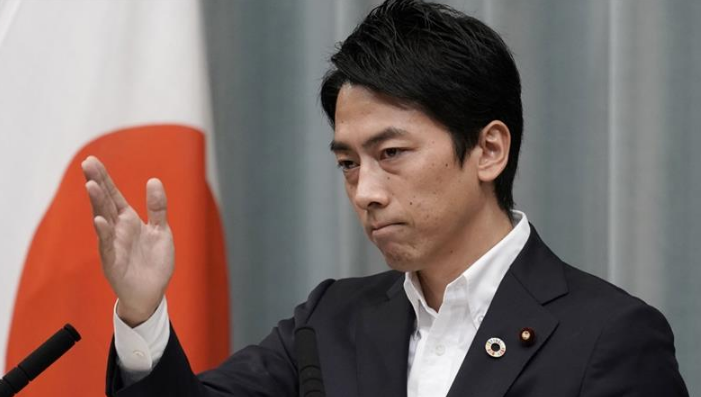
‘Fun-cool-sexy-jwa’ is a Korean nickname for the Japanese politician Shinjiro Koizumi. It comes from remarks he made as Japan’s environment minister at the UN Climate Action Summit in New York on September 22nd, 2019.
Asked how to tackle climate change, he answered that a problem that large has to be dealt with in a way that is fun, cool and sexy. When a reporter asked what he meant, he declined to elaborate, saying that explaining it would not itself be sexy. The nickname takes the three words and adds an honorific suffix.
The formulation was not originally his. It appears to borrow a slogan used by Christiana Figueres, the former executive secretary of the UNFCCC, to the effect that environmental issues must be made sexy — the underlying point being that public causes have to win public attention and support. The problem was delivering the three words at an international summit with no explanation attached.
Spread
The remark travelled through Japan and on into Korea, where it became more than a nickname. Commentators went on to note a habit of restating the same point in different words, and enough examples accumulated that Korean outlets ran pieces collecting the ‘Koizumi quotations’.
Part of why it lasted is that he stayed in senior office. After the environment ministry he took other portfolios including agriculture, forestry and fisheries, appearing regularly in the Korean press — where the nickname kept turning up in the headline alongside his name.
Usage
- For rhetoric that sounds impressive and says nothing
- Pointing out a statement that restates itself in different words
- As a reflexive tag on any news item about him
Since it carries mockery of a real politician, it is generally used to name a rhetorical style rather than to attack the person.
Sources
- Wikiquote, ‘Shinjiro Koizumi’ — the September 22nd, 2019 remarks and their context
- Namuwiki, ‘Shinjiro Koizumi’ — how the nickname formed and the criticism of his circular phrasing
- Hankook Ilbo, September 20th, 2024 — the nickname used as a fixed epithet in the Korean press
- Slownews, ‘Learning the rhetoric of fun-cool-sexy Koizumi’ — analysis of the style itself